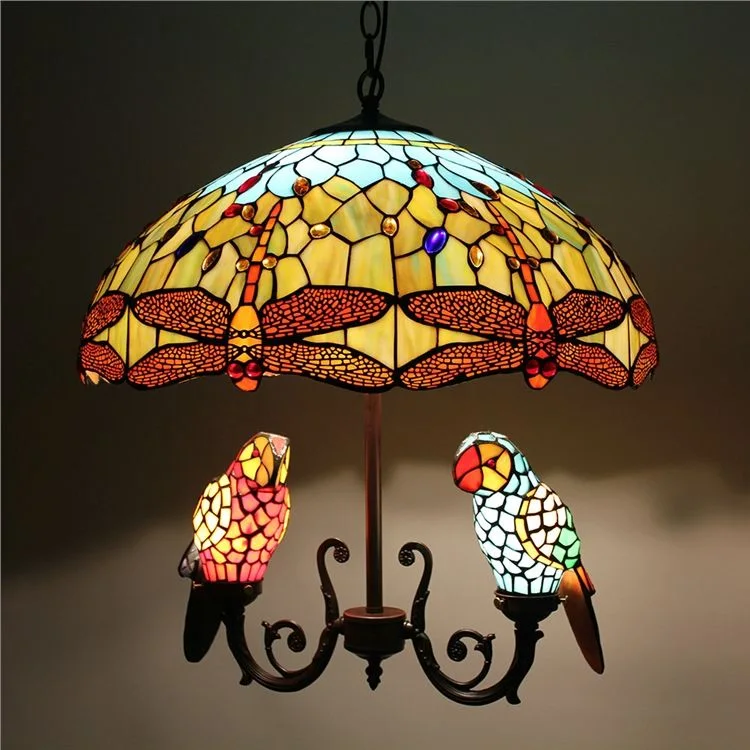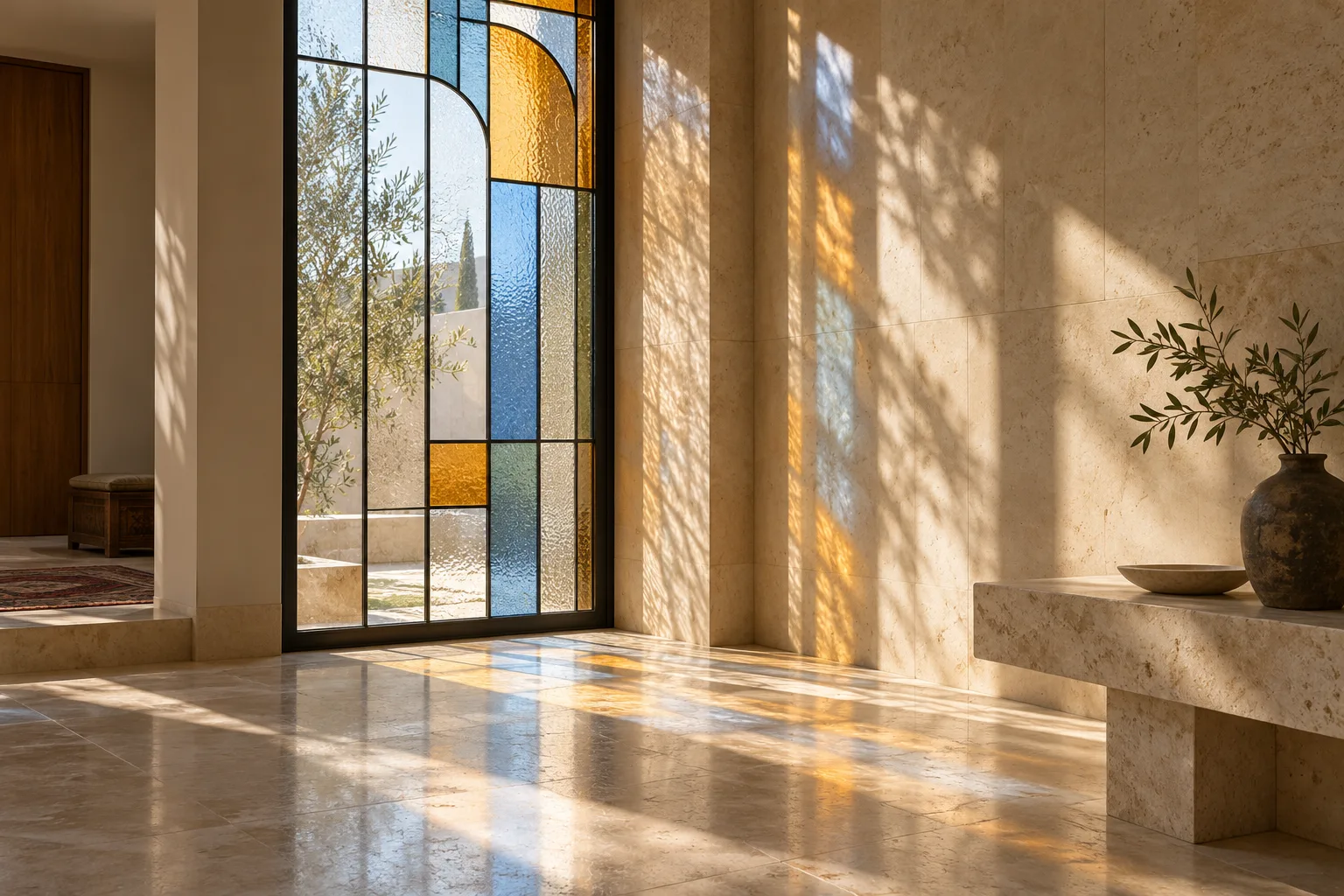


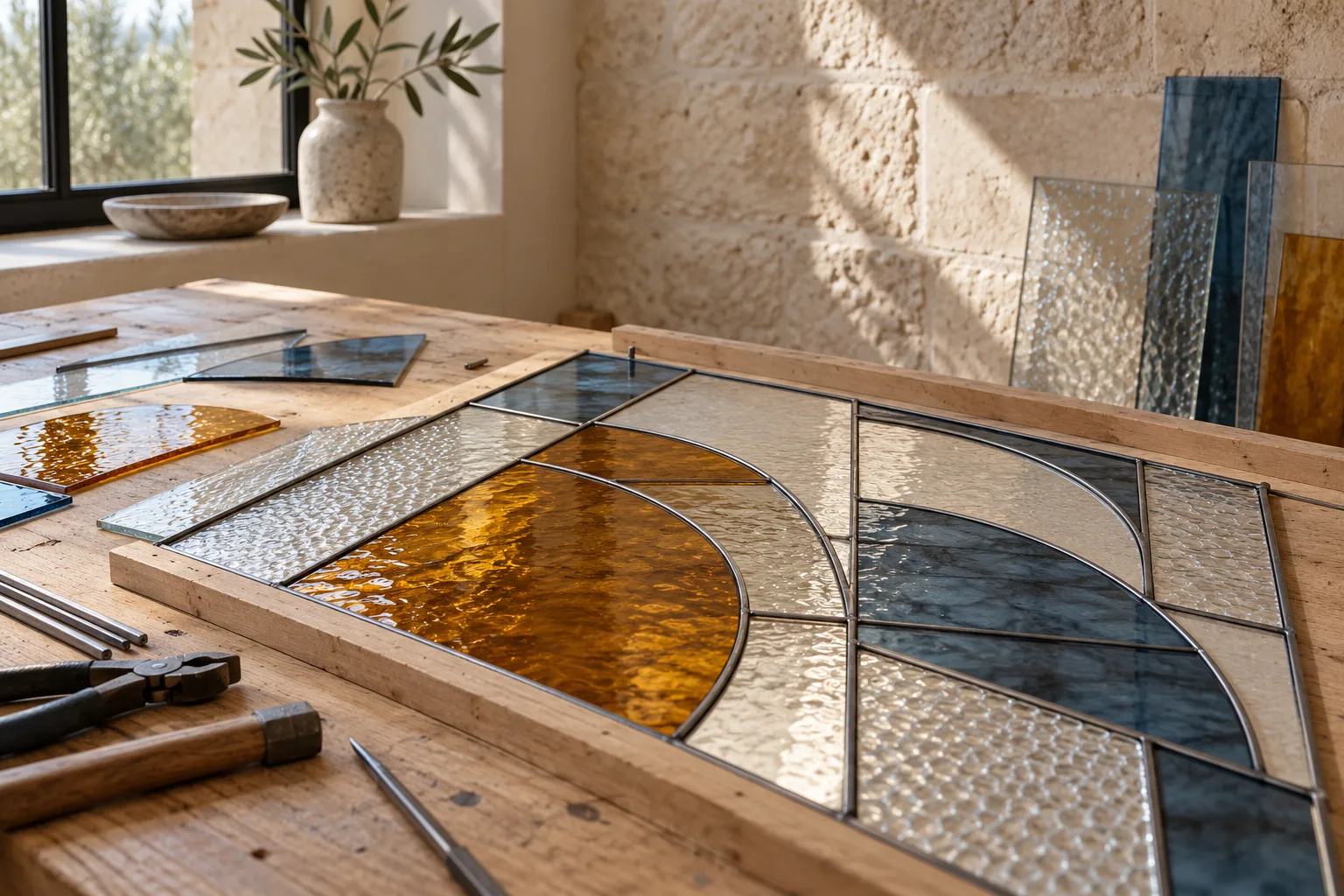
Stained glass is made by cutting pieces of glass to a design and joining them into a panel. The result may be a window, door, skylight, or ceiling feature. Quality depends on more than color: the design's fit with the space, glass selection, and assembly precision matter just as much.
From drawing to glass pieces
First, establish the opening dimensions, the path of light, and the amount of visibility needed. Divide the design into pieces that can actually be cut and assembled. Check colors and textures in the space's real light: a sample on a table can look different against daylight.
After cutting, prepare the edges and arrange numbered pieces according to the drawing. They may be joined with lead came or with copper foil in the Tiffany method. Panel size, the fineness of the design, and installation location guide the choice. The completed panel needs a frame and support suited to the project.
What should you decide before ordering?
- Where the panel will be used and the approximate opening size;
- Desired daylight and privacy;
- A design style and colors suited to the architecture;
- Whether the panel is indoors or exposed to the weather.
How is it different from one sheet of colored glass?
A single colored sheet presents color and texture on an uninterrupted surface. In stained glass, the divisions themselves form part of the image. Joining lines define colors and make the pattern legible. Piece size, line rhythm, and viewing distance therefore matter alongside color. A detailed design viewed from several meters away may need simplifying.
Choosing a joining method
With lead came, glass edges sit in grooved metal profiles that are joined at their intersections. With the Tiffany method, copper foil wraps each edge before soldering, allowing finer curved lines. Neither method suits every project. Consider panel dimensions, detail, surrounding frame, and location together. A large panel often needs additional subdivision and support; a small sample alone cannot settle its construction.
Approving a sample
Before fabricating all panels, a sample section can reveal color, transparency, line width, and appearance under actual light. It is especially useful when colored, opal, and textured glasses are combined. Review the dimensioned drawings and material list as well as the image of the design. This reduces the gap between what was approved and what gets built.
The US National Park Service's stained glass preservation guide offers further information on glass and frames.
Where to go next
The stained glass door guide and window guide explain choices for two different locations. For larger structures, read about designing and installing a stained glass dome.
For exterior or overhead use, protective glazing, structure, and weatherproofing must be designed for the specific project. Explore applications in our window, door, and skylight services.