

Plain glass and stained glass partitions can both divide a room without a solid wall. The main differences are visibility, the way light passes through, and the partition's role in the interior. Choose according to how the space is used.
When transparency comes first
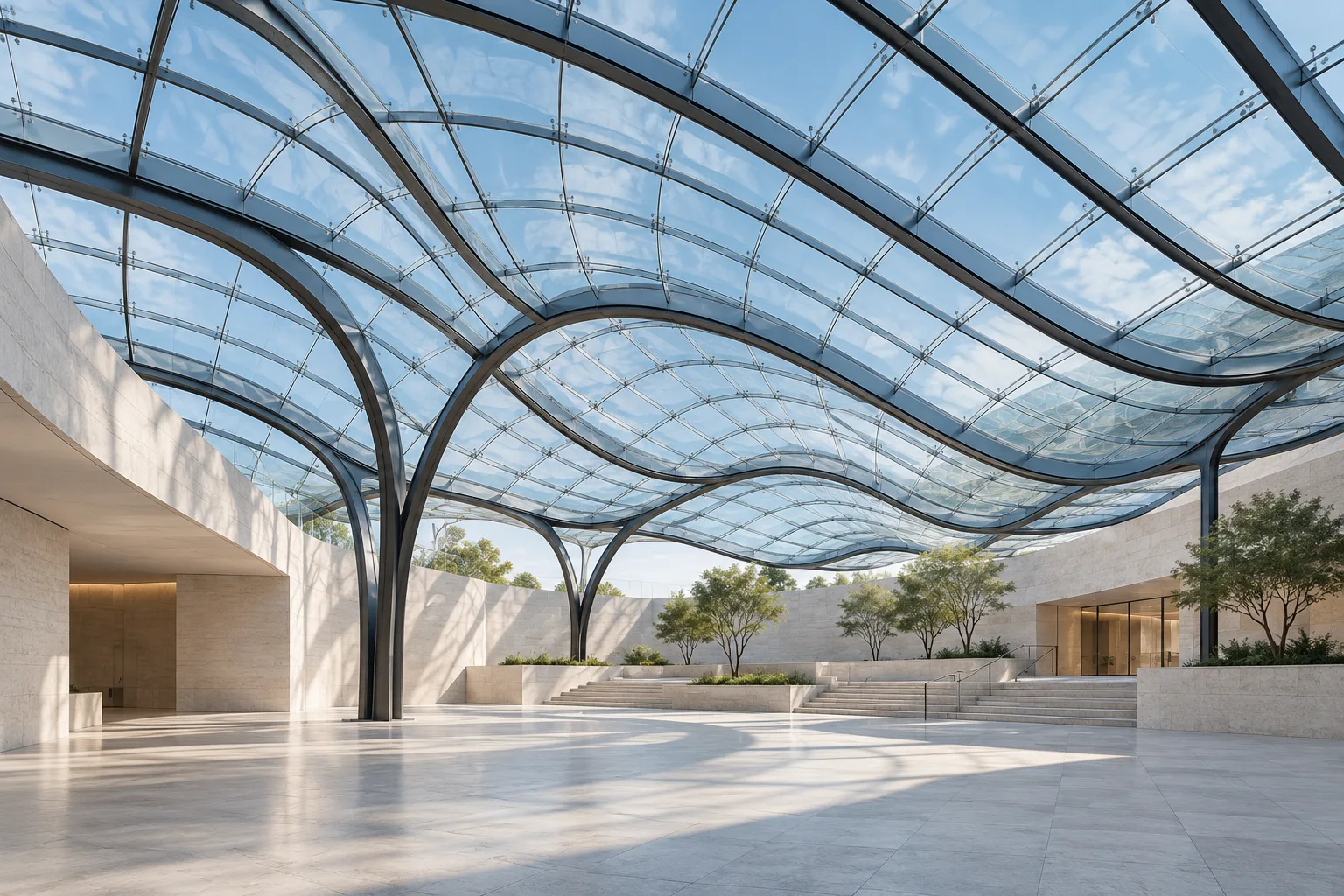
Plain glass works where visual connection between the two sides matters. Frosted or textured glass can limit some views. Frame type, panel size, and installation details should suit circulation and daily use.
When color and pattern matter
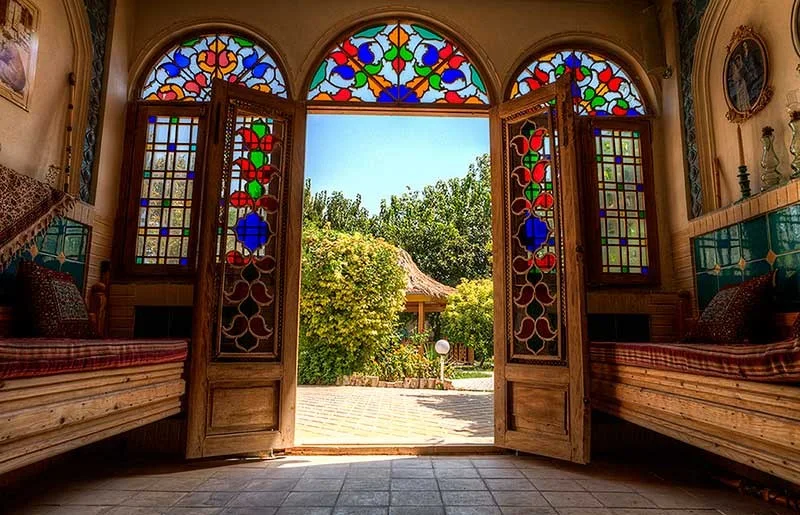
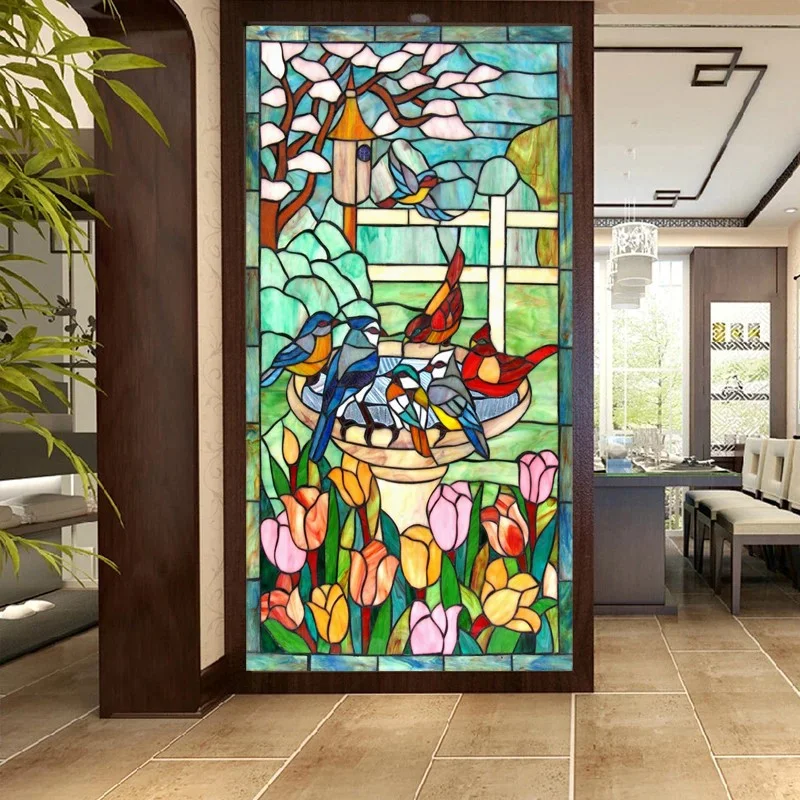
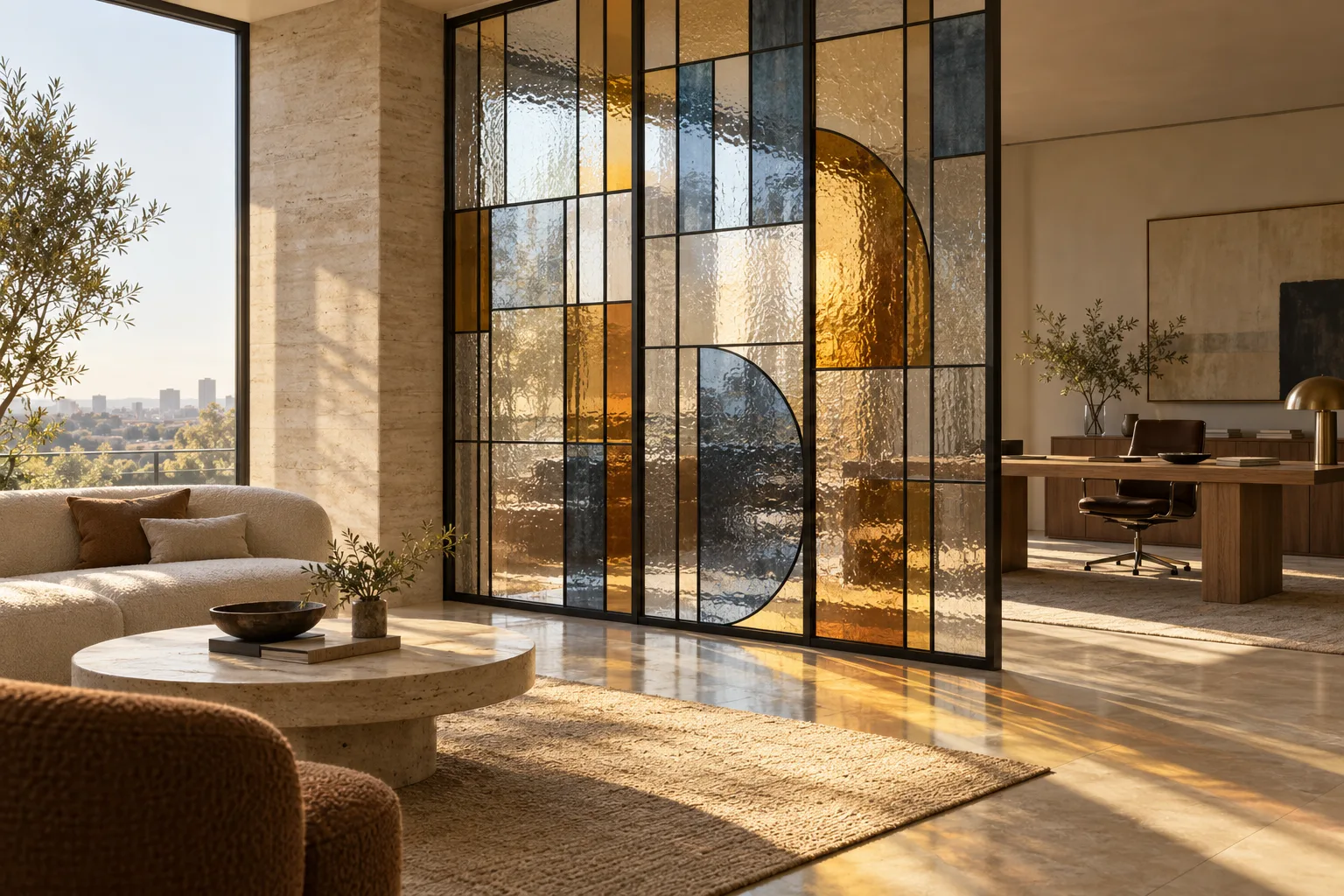
Stained glass turns the divider into a designed surface. Its colors and pattern can give identity to a lobby, office, or home while admitting some light. Privacy depends on pattern density and glass type; colored glass is not necessarily opaque.
Compare by use
A meeting room may need to screen the corridor; a lobby may need a feature at its entrance. A shared office may prioritize daylight in its center. Plain glass usually offers stronger visual connection; stained glass can selectively screen views and add color. Neither alone solves every requirement.
Mark on a floor plan where people will see the partition and from what distance. A panel behind a desk has different demands from one beside a busy route. Seated and standing eye levels influence the placement of clear and opaque pieces.
What about sound and privacy?
Visual privacy is different from sound insulation. Texture and color can reduce visibility, but acoustics depend on the whole panel, frame, joints, and connections to floor and ceiling. If a meeting room needs quiet or complete privacy, state that requirement separately. A photograph of attractive glass cannot establish acoustic performance.
Fixed, movable, or combined?
A fixed partition provides a lasting division. A movable one must also withstand repeated movement and handling. Panel weight, width, and grip points affect the frame. Combining clear and stained glass sections can balance daylight and privacy.
Provide photos from both sides, approximate sizes, circulation paths, and expectations for sight and sound when requesting a design. These details are more useful than selecting a pattern alone.
Making the final decision
The stained glass window guide explains daylight and privacy further. Compare proposal scopes with the stained glass cost guide. Decide which zones should remain open, partly screened, or private. Check daylight paths so the space behind the partition does not become too dark. Movable or busy-area partitions need glass and frames designed for that setting. See our stained glass partition service.