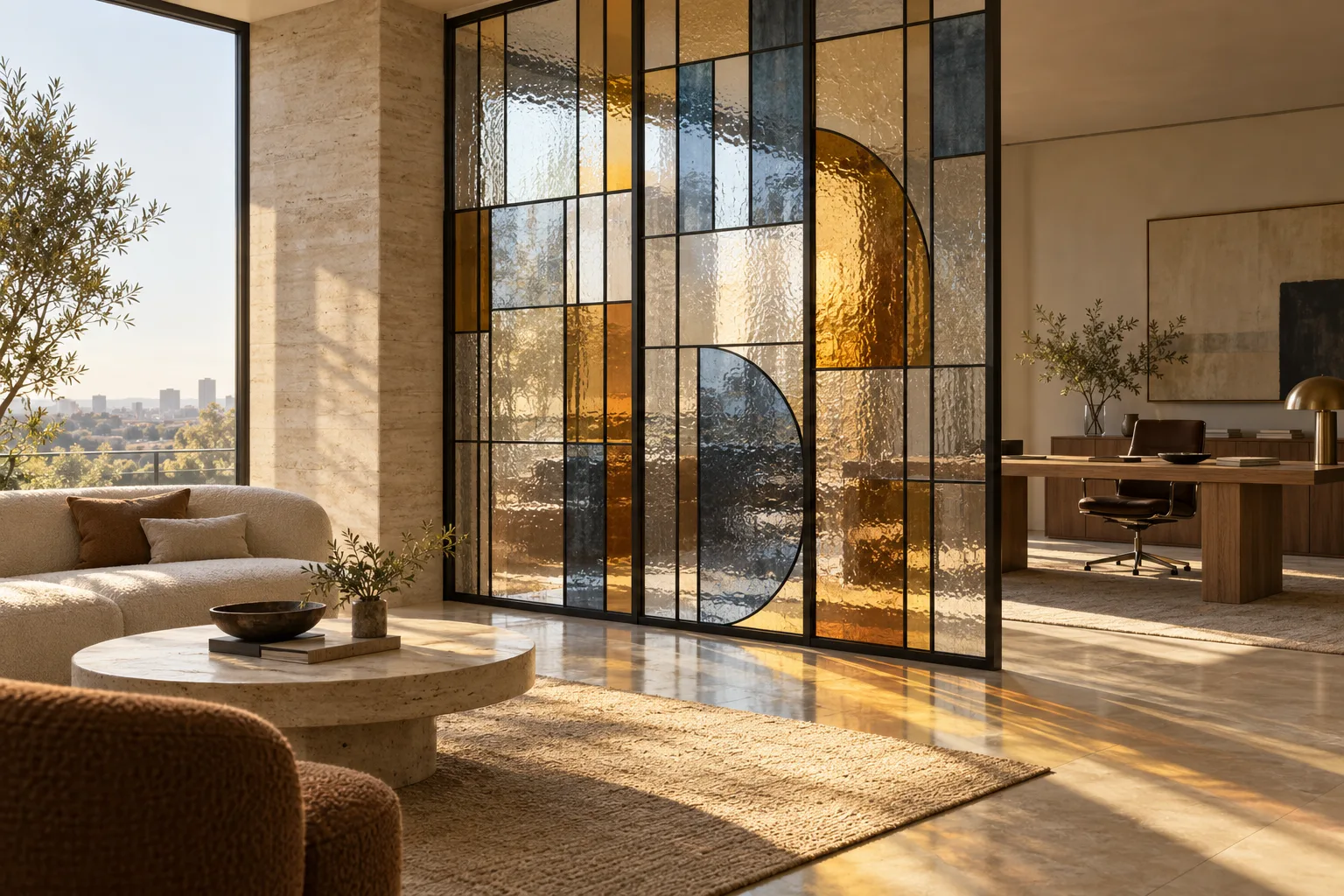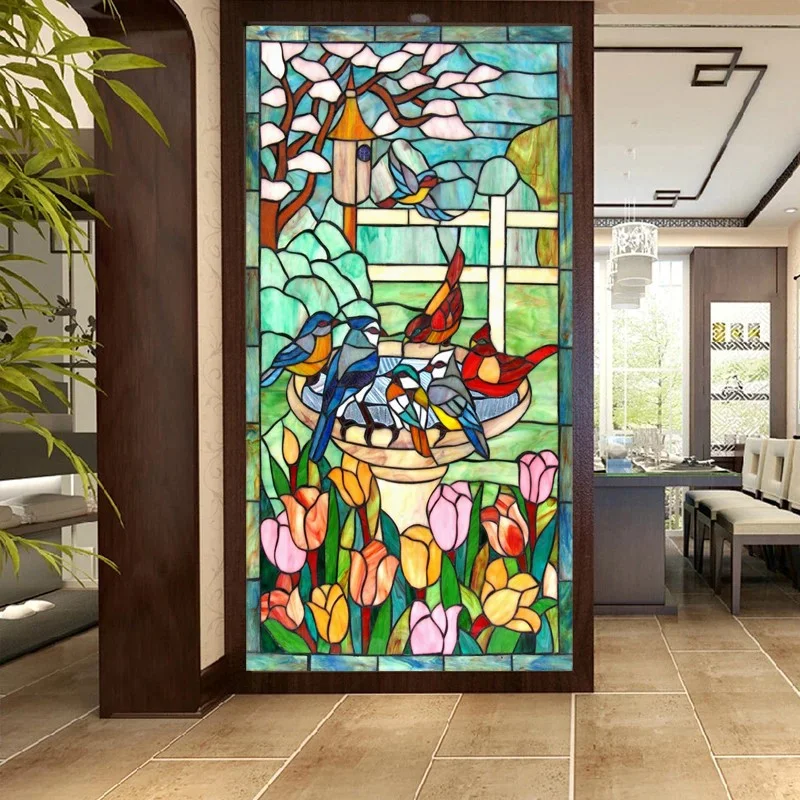


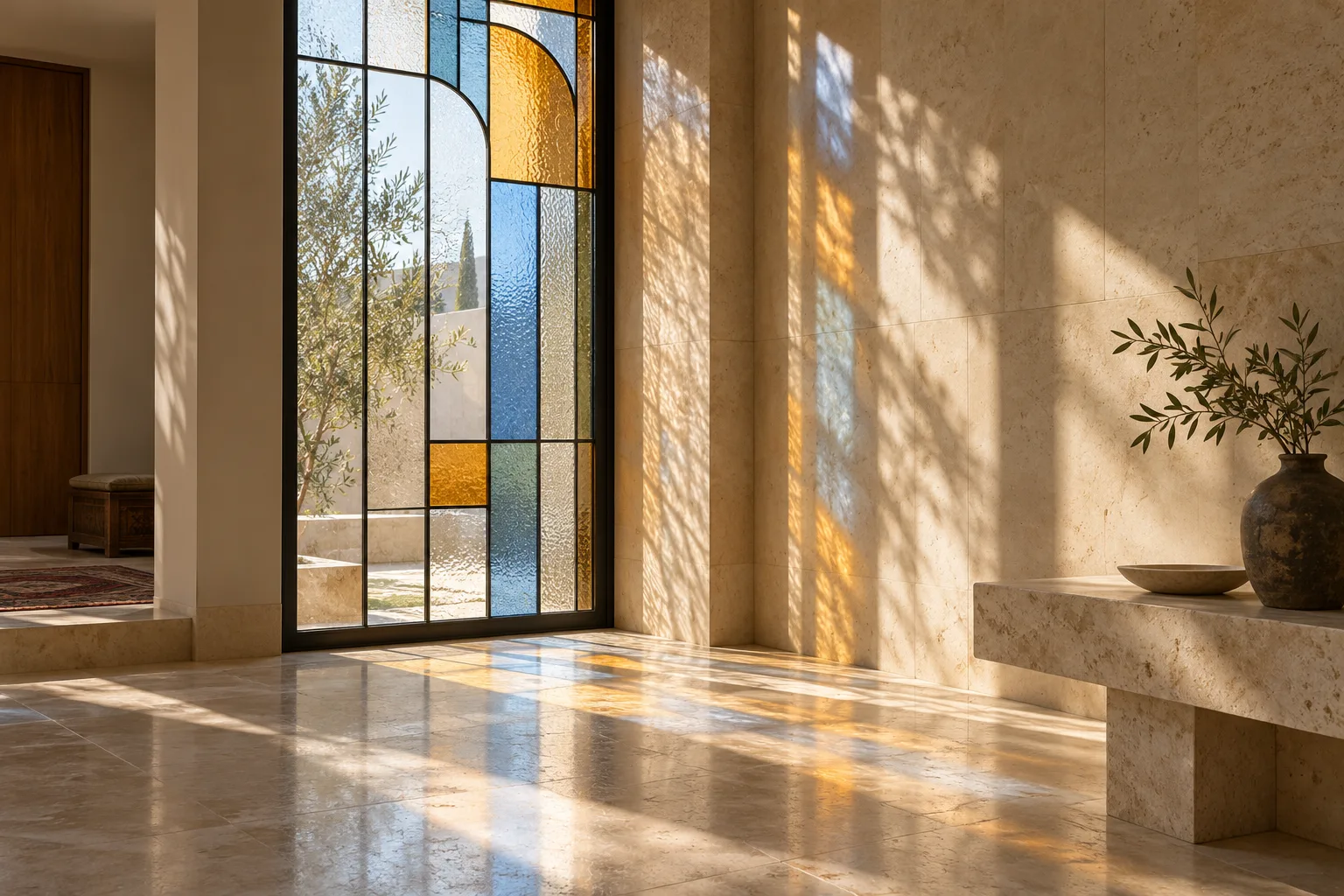
A stained glass window changes both daylight and visibility. Start with its location: is it an exterior window or an interior divider? Does it receive direct sun? Is a view out needed, or is privacy more important? These answers guide the pattern and glass.
Design for the available light
Clear, opal, and textured pieces transmit light differently. A very dark design may disappoint in a room with limited daylight. Under strong sun, test the balance of color and clear areas. Review the pattern at the actual size and orientation of the window, not only on a screen.
Exterior and interior windows
An exterior window needs a plan for protecting the decorative panel, sealing the frame, and cleaning. Sometimes stained glass is paired with another glazing assembly; the correct arrangement depends on the project. Interior glazing avoids rain but still needs suitable framing, opening details, and access.
How does orientation affect the design?
A window shaded most of the day shows color differently from one in direct sun. An interior window may instead be lit from behind by fixtures. Check the opening at several times of day. Decide whether colored patterns should fall on walls and floors or whether the window itself is the focal point. If the outward view matters, position clear pieces at eye level.
Protecting and inspecting the panel
Protective glazing may help an exterior window, but poor detailing can trap moisture between layers. The US National Park Service guide to protective glazing explains the issue for historic windows. New windows likewise need details matched to their frame, climate, and ventilation; adding another pane is not a universal answer.
Everyday care
Keep photographs and panel drawings after installation. During periodic checks, record cracks, panel movement, frame corrosion, or unusual moisture. Clean gently using a method suited to the glass, paint, and joints; painted or old surfaces may need specialist care. The stained glass care guide discusses documenting condition and cautious cleaning.
What should the final documents include?
Record panel sizes and numbers, glass specification, frame drawings, and cleaning or replacement access. This helps restore the original design if a piece breaks or the room's use changes.
Related guides
For how pieces are joined, start with what stained glass is and how it is made. For separating rooms while sharing light, see stained glass versus plain glass partitions. Prepare opening dimensions, photos from inside and outside, and your daylight and privacy goals. Explore options in our stained glass window service.