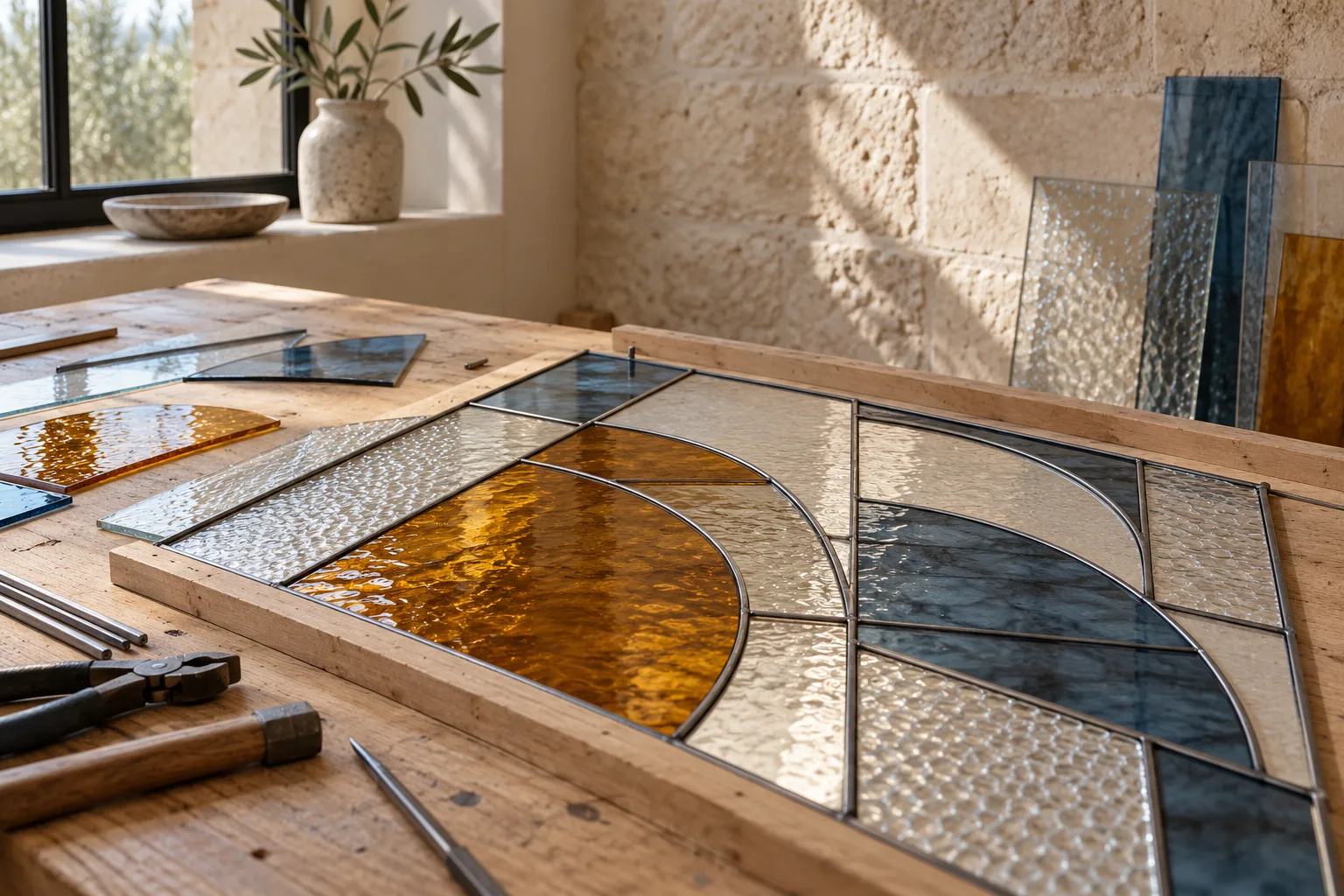


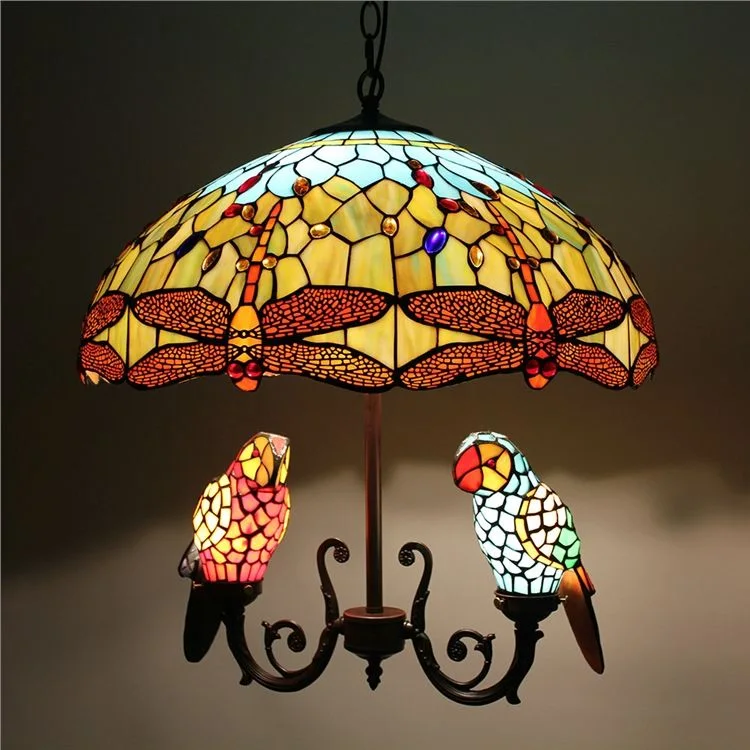
In the Tiffany or copper foil technique, glass pieces are cut to a pattern, wrapped around their edges with thin copper tape, arranged together, and soldered. The method can make fine curves and small details possible. Whether it is appropriate depends on the size of the work, where it will be installed, and its supporting structure.
How the work is assembled
The design is divided into pieces that can be cut and numbered. Colour, texture, and grain direction are checked against the intended light. After cutting and preparing the edges, adhesive copper foil is applied around each piece. The pieces are arranged on the pattern and the joints are soldered. Finally, the panel is cleaned, inspected, and installed in a suitable frame.
Accurate cutting and consistent foil width affect the appearance of the lines. Changing the gaps or turning a textured piece can alter the overall pattern. A large panel or one installed overhead needs support details designed separately from the decorative joining technique.
Copper foil and lead came
With lead came, glass pieces sit in grooved lead profiles and the profile intersections are soldered. With copper foil, the tape wraps each piece and the seams are soldered. The difference is not whether solder exists; it is how the glass edges are held and how the joining lines are formed. Both approaches have appropriate uses.
Lampshades, small decorative panels, and patterns with fine pieces are familiar copper foil applications. Doors, windows, and skylights also require an assessment of size, impact, exterior exposure, and protective framing. A technique name alone cannot establish the durability of a large installation.
Read what stained glass is and how it is made for the wider process. The US National Park Service guide to stained glass also explains copper foiling.