

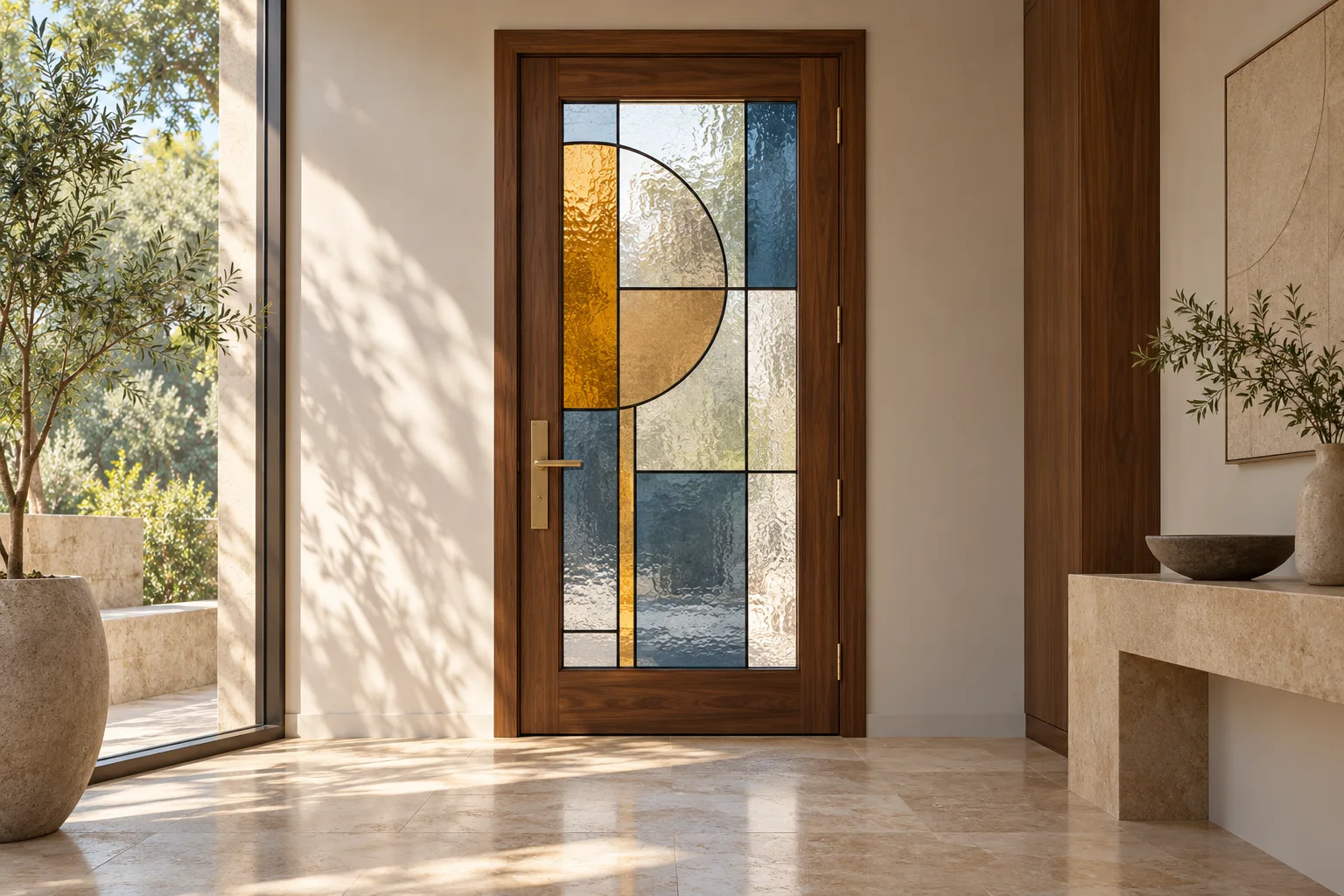
A stained glass door can turn an entrance or passage into an architectural feature. Its pattern should read at close range and suit the door's dimensions, frame, and desired visibility. A delicate window pattern may need a different layout on a door opened every day.
Location and visibility
For an entrance, consider sunlight and the relationship between inside and outside. An interior door may prioritize light between rooms or privacy. Frosted, textured, and colored glasses allow different amounts of light and visibility; inspect physical samples in similar light.
Frame and construction
The timber or metal frame must suit the panel's weight and the way the door is used. Handles, hinges, and frequently touched areas influence the glass layout. Doors exposed to impact or weather need protective glazing and installation details specified for that use.
At what distance is the pattern seen?
A door is touched up close and viewed from several steps away. It needs close-up detail and a legible overall composition. Main lines and frame divisions matter in a large entrance; privacy and the adjoining rooms may matter more for a room door. With multiple leaves, align the pattern at the meeting edges.
Interior and entrance doors differ
An interior door commonly separates rooms while passing light. An entrance faces traffic, frequent contact, and sometimes outdoor weather. Check the opening type, frame strength, hardware, and panel protection alongside the ornament. Specify where decorative glass sits relative to protective glazing and how it can be accessed for repairs.
Test privacy with a sample
Colored glass does not always provide privacy. A light, clear piece may allow a direct view, while textured or opal glass diffuses the scene behind it. For a home entrance or meeting room, inspect samples in daylight and with interior lights on; visibility can change substantially.
Before fabrication
Review dimensions, swing direction, hinge and handle positions, photographs of both sides, and preferred colors together. An approved drawing should show glass placement, frame lines, and touch points. This helps make the artwork practical as a working door.
Related choices
If you are choosing between a door and a window, see the stained glass window guide. For a quote, review stained glass cost factors. Prepare site photos, approximate measurements, opening type, and a style reference before contacting a maker. Applications and options are described in our stained glass door service.