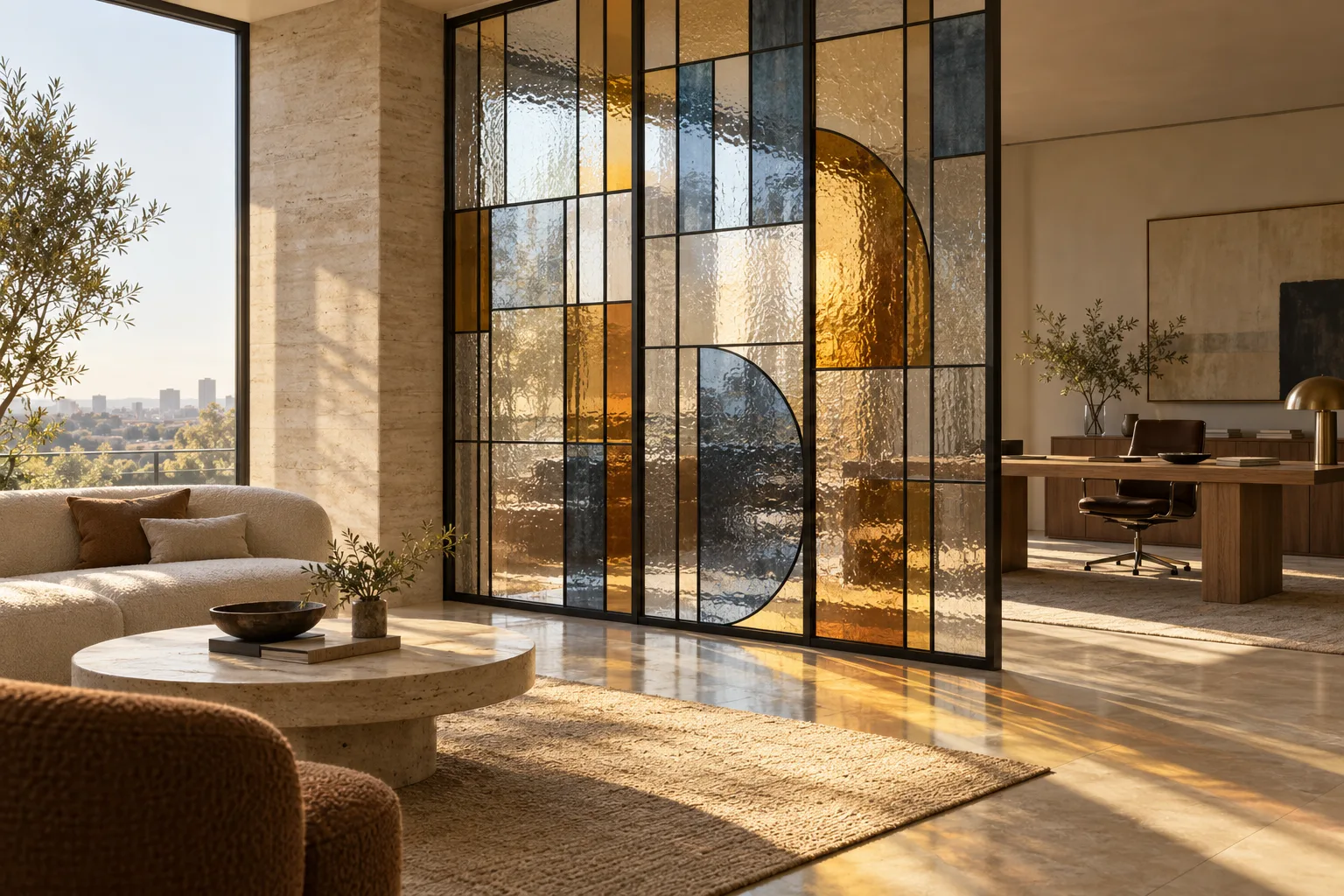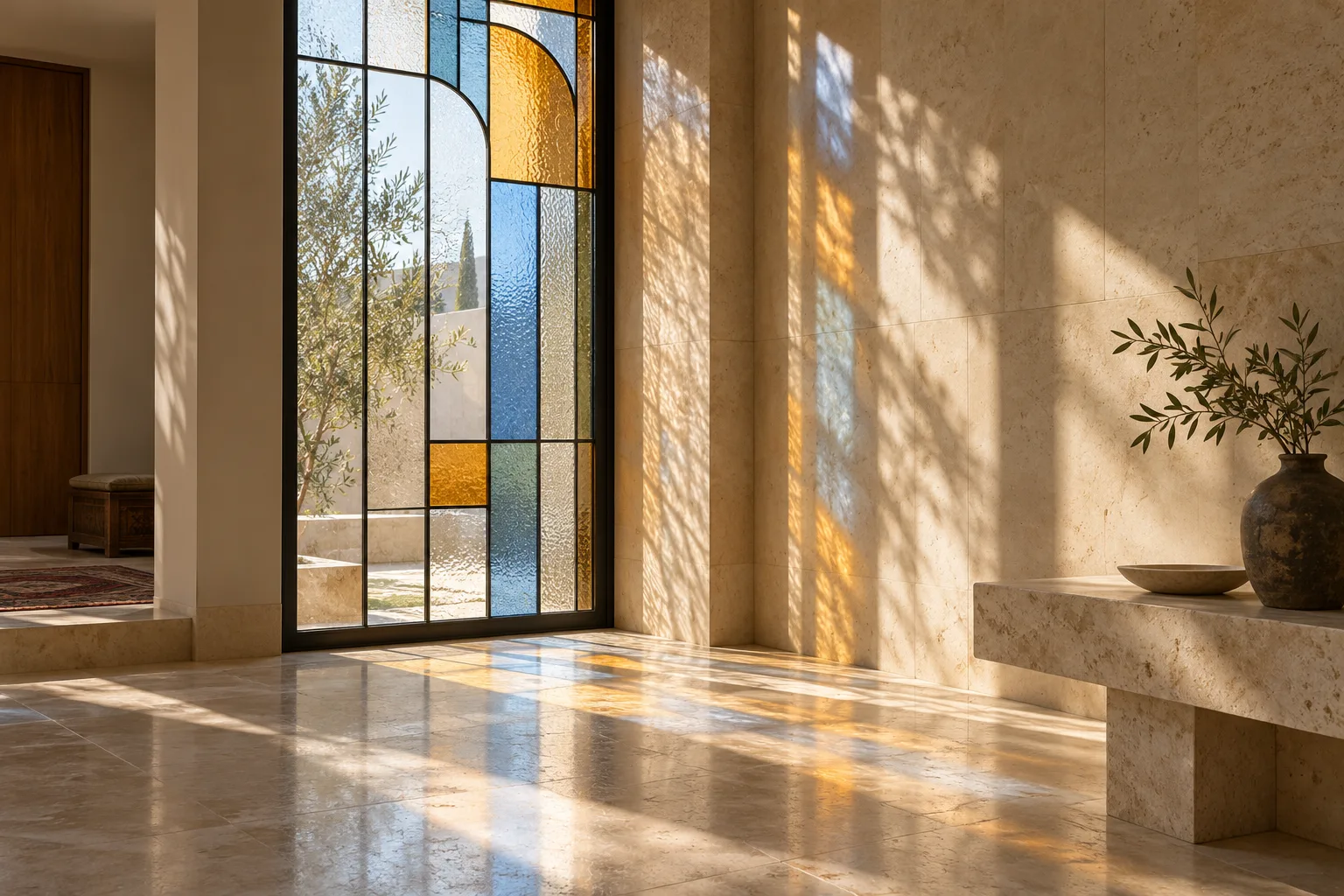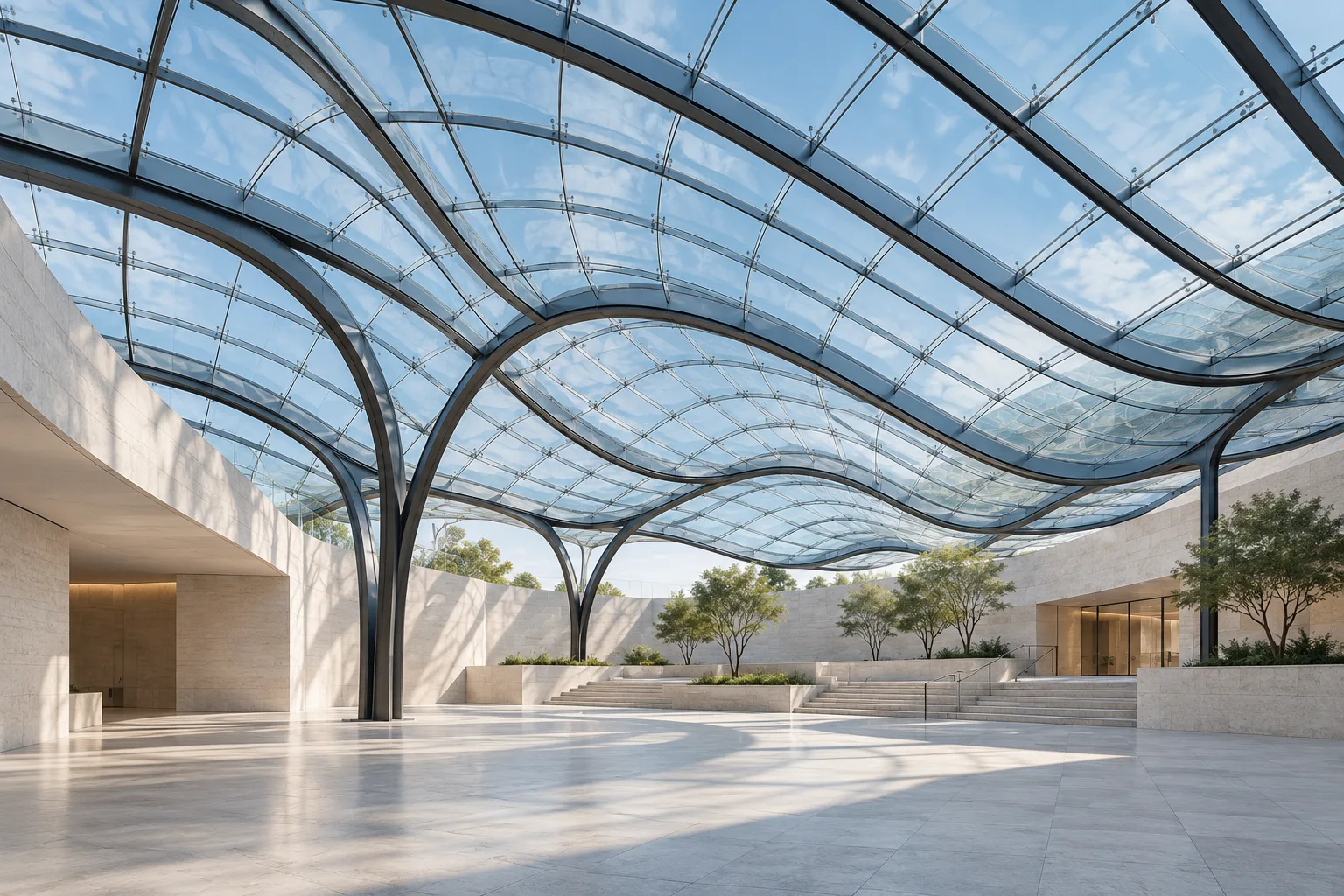


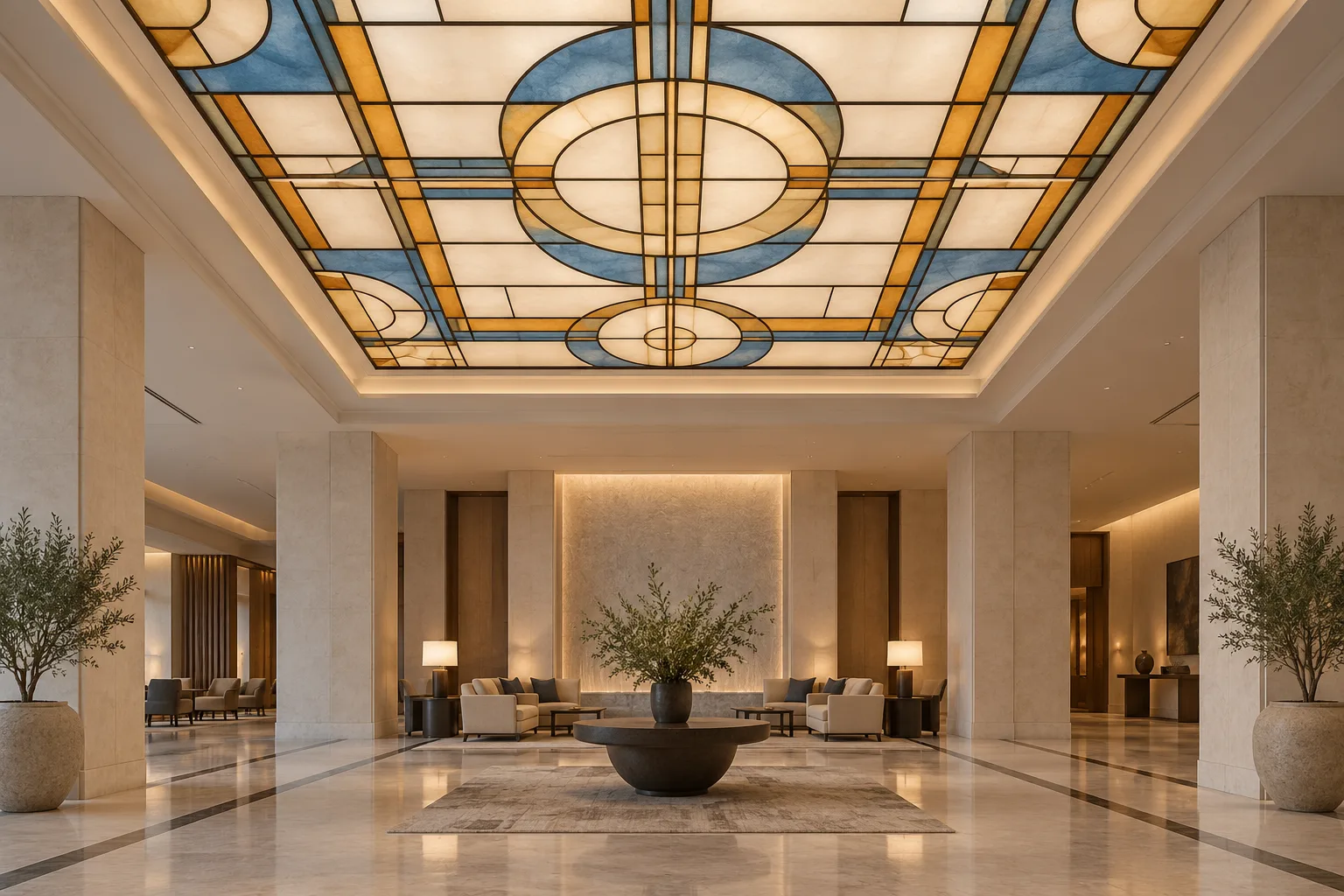
A stained glass false ceiling and a skylight can look similar from below, but serve different purposes. A false ceiling usually sits indoors below the main roof and can be lit from behind. A skylight forms part of the building envelope and brings daylight from outside.
Where does a false ceiling work?
Where daylight cannot enter from above, backlit stained glass can create a luminous colored surface. Match the design to ceiling height, panel size, and views across the room. Plan access to lights and removable panels for servicing from the outset.
What else does a skylight require?
Beyond the glass pattern, a skylight faces weather loads, rain, and temperature changes. Structural checks, overhead glazing selection, seals, and drainage are part of its design. The stained glass may sit inside with a protective layer outside; the arrangement depends on the project.
How does backlighting change the result?
The look of a false ceiling by day and night depends heavily on the lights behind it. Lamp positions and their distance from the glass determine whether illumination is even. A light too close to one area creates a bright patch and weakens the pattern. Testing one panel with the proposed lighting helps select colors and textures.
Specify who can reach the ceiling cavity and how lamps will be serviced. A panel that must be destroyed to replace a lamp is impractical. Removable modules are an installation decision that also affects the pattern.
When is daylight the priority?
If the goal is to illuminate the room naturally from above, evaluate a skylight. Consider building orientation, hours of use, glare, and unwanted heat. Flat, pyramidal, arched, and domed skylights produce different spatial effects and depend on the opening.
A false ceiling can instead give a lobby or interior without roof access controlled light and color. Both solutions may appear in different parts of one building if their roles are clearly defined.
Record four things before choosing
- Is there a roof directly above the room that can be opened? 2. Should the light come from daylight or electric fixtures? 3. From which floors and distances will panels be seen? 4. How will cleaning and servicing be accessed? The answers are more useful than choosing from a photograph alone.
More guidance
For daylight, read the skylight glass guide on layers, lighting, and cleaning. To understand the colored panels, see how stained glass is made. Explore the stained glass ceiling service for decorative interior light or the stained glass skylight service for daylight from the roof.